

Feature engineering that survives production scale
Feature Engineering as a repeatable delivery practice — applied with tooling, governance, and metrics your team can sustain.
Feature Engineering — Overview
Feature engineering transforms raw data into signals models can learn from — and production systems can compute reliably.
We design feature stores, pipelines, and validation so training and serving stay aligned as data volumes grow.
Our feature engineering process
Structured from domain discovery through operated feature pipelines.
01
Domain mapping
Work with subject experts to identify predictive signals and data sources.
02
Feature store
Central registry for training and serving consistency.
03
Prototype features
Explore transformations offline with reproducible notebooks and tests.
04
Governance
Documentation, ownership, and deprecation policies for feature lifecycle.
05
Pipeline build
Production pipelines with versioning, backfill, and point-in-time correctness.
Feature engineering — scope and boundaries
Clarity prevents duplicate pipelines and training-serving skew.
Feature engineering
Designing, computing, and validating inputs models consume at train and inference time.
Feature stores
Shared infrastructure for reuse across models and teams.
Point-in-time correct
Features reflect only information available at prediction time — critical for finance and forecasting.
Not raw ETL
ETL moves data; feature engineering optimizes data for ML consumption.
Not one-off notebooks
Exploratory work must graduate to tested, scheduled pipelines.
Validation gates
Schema checks, null rates, and distribution monitors before features reach models.
Trusted by teams who ship with us
Production engineering across retail, supply chain, education, and security — selected logos from recent programs.




Feature engineering — common questions
We map your current pipelines, define ownership and checkpoints, then implement tooling and runbooks so the practice continues after our engagement.
Yes. We extend Kubeflow, MLflow, SageMaker, Vertex, or custom stacks — introducing new components only where they reduce operational risk.
Documented workflows, automated gates, dashboards, and trained internal owners — not slide decks.
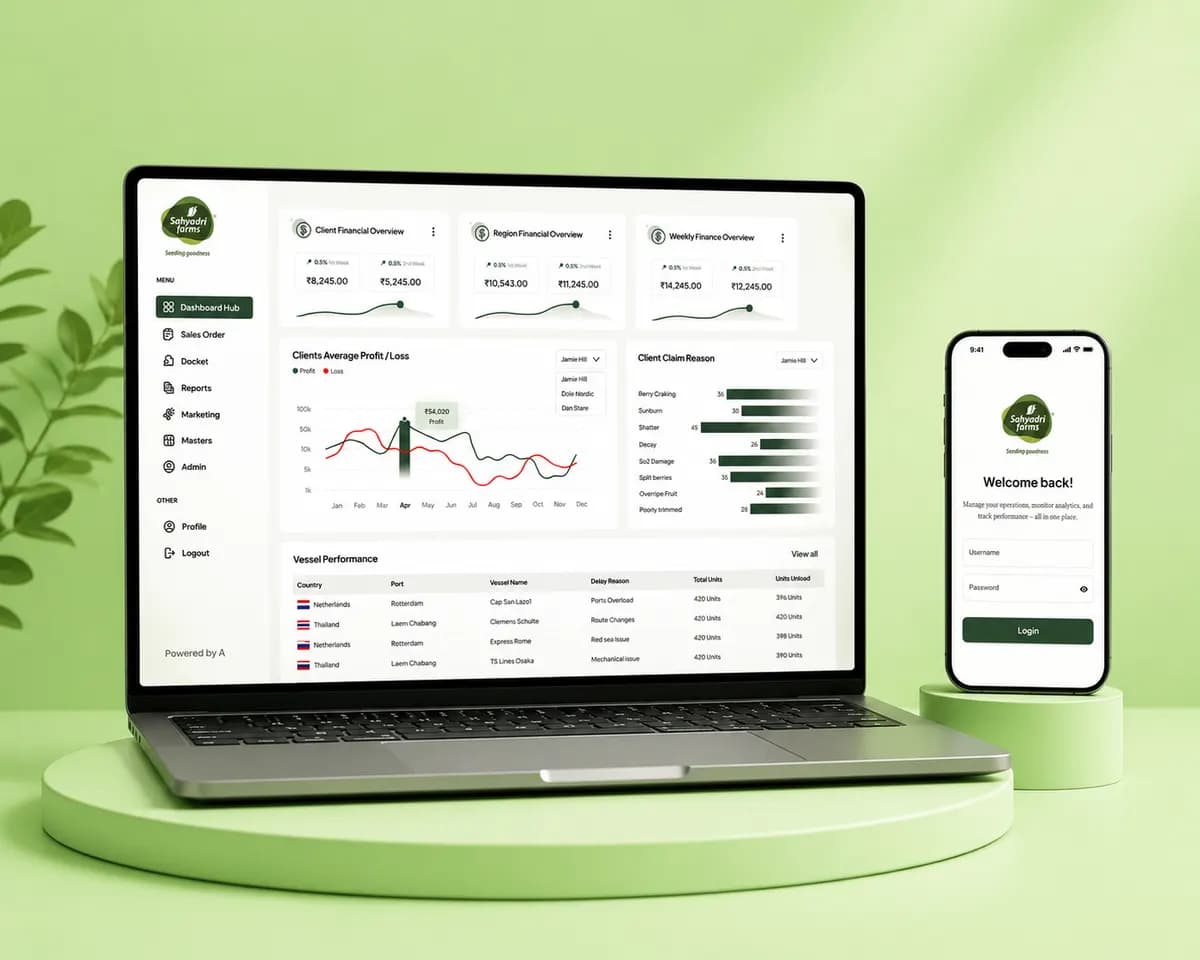
Farm-to-market operations that survive peak harvest
Traceability, cold chain monitoring, and export workflows engineered for high-volume perishable supply chains — from intake through dispatch.
Read story
Self-serve analytics without opening the BI queue
Governed natural-language access to business data so leaders get answers without waiting on analysts or raw SQL.
Read storyMove forward with feature engineering
Book a conversation — we will scope the engagement or tell you if another path is a better fit.